

Expansion Vessels FAQs
Expansion Vessels FAQs
In this Q&A feature, we sit down with Chris Haycock, Technical Support Engineer at Altecnic,to answer some of the most frequently asked questions surrounding expansion vessels.
On this Page:
- Understanding Expansion Vessels
- Expansion Vessel Selection & Sizing
- Pre-Charge Pressure & Vessel Performance
- Expansion Vessel Troubleshooting
- Maintenance & Best Practice
Understanding Expansion Vessels
What is an expansion vessel and why is it needed?
The simple answer is that an expansion vessel gives water somewhere to go when it expands. As water heats up within a sealed heating or hot water system, its volume increases, causing the system pressure to rise. Without an expansion vessel, that pressure could cause the pressure relief valve to discharge, place unnecessary strain on system components, or even lead to leaks and damage.
By absorbing this increase in water volume, the vessel helps maintain stable system pressure, protecting boilers, heat pumps, HIUs, unvented cylinders, pipework and other key components while supporting safe and efficient operation.
How does an expansion vessel work?
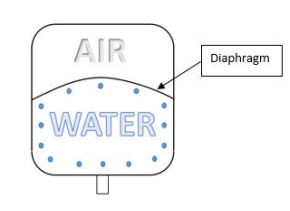
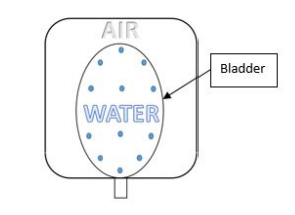
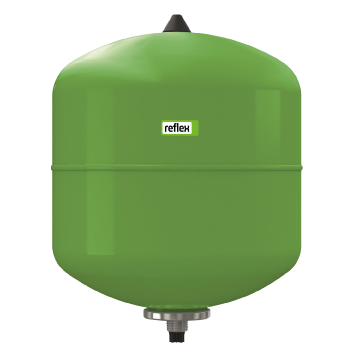
Although heating, potable and flow-through vessels are designed for different applications, they all work on the same principle. As water expands, it enters the vessel and compresses a cushion of air or nitrogen that’s separated from the water by either a diaphragm or bladder. As the system cools, the compressed air pushes the water back into the system, maintaining stable pressure.
The difference lies in their construction and intended use:
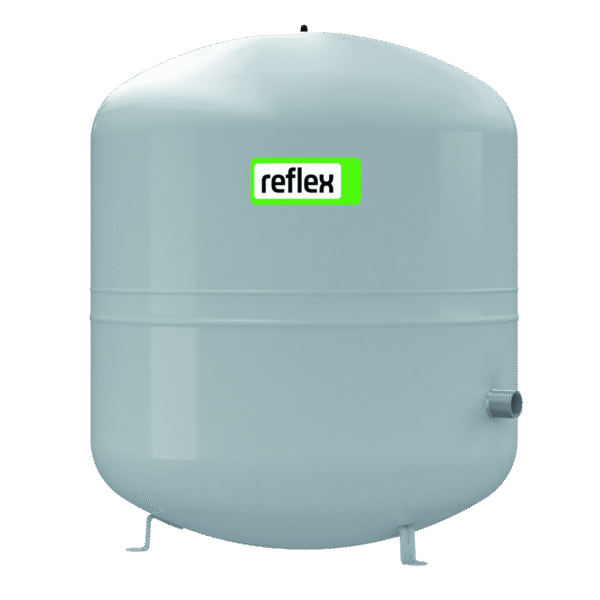
Heating Vessels:
Heating vessels use a diaphragm to separate the system water from the air charge and are designed for sealed heating and cooling systems.
Potable Vessels:
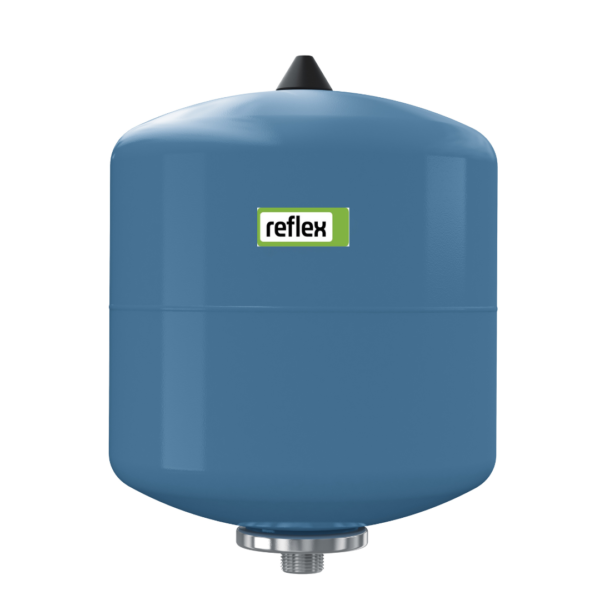
Potable vessels use a rubber bladder to prevent wholesome water from contacting the steel body, helping maintain water quality.
Flow Through Vessels:
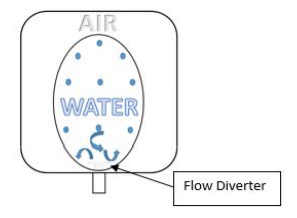
Flow-through vessels operate like potable vessels but include an internal flow diverter that encourages continuous water movement, reducing stagnation and improving water hygiene.
Expansion Vessel Selection & Sizing
Why is correct vessel sizing important?
Correct sizing is essential because the vessel must safely accommodate the increase in water volume as the system heats up. To size a vessel correctly, installers need to know the system volume, maximum flow temperature, static height and safety valve setting.
If the vessel is too small, you’ll often see excessive pressure rises and repeated pressure relief valve discharge. Oversizing won’t usually cause operational issues, but it can add unnecessary installation costs. Specialist vessels should also be selected for applications such as solar thermal, solid fuel and booster systems.
Can the same expansion vessel be used for heating and potable water?
No. Although they look similar, they’re designed for different applications. Potable vessels use an internal butyl rubber bladder that prevents drinking water from contacting the steel body, helping maintain water quality and ensuring compliance with wholesome water applications.
Installer Tip: Altecnic provides free expansion vessel sizing calculators for both heating and potable systems to simplify vessel selection.
Pre-Charge Pressure & Vessel Performance
What is pre-charge pressure and why does it matter?
Pre-charge pressure is the air or nitrogen pressure already inside the vessel before the system is filled. Think of it as the cushion that allows the vessel to absorb expanding water while maintaining stable system pressure.
If the pre-charge isn’t set correctly, the vessel won’t perform as intended, which can lead to unstable pressures and unnecessary pressure relief valve discharge.
Installer tip: The pre-charge pressure of an expansion vessel can be easily checked and adjusted via the Schrader valve located at the top of the vessel. To simplify expansion vessel maintenance, Altecnic offers a digital handheld pressure gauge, enabling installers to check pre-charge pressure quickly and accurately.
Why are some expansion vessels nitrogen charged?
Nitrogen diffuses through the diaphragm much more slowly than compressed air, helping the vessel retain its pre-charge for longer. This reduces maintenance, improves long-term performance and also minimises oxygen within the vessel, helping reduce the risk of internal corrosion.
Installer Tip: All Reflex expansion vessels supplied by Altecnic are factory pre-charged with nitrogen. This helps reduce corrosion and slows pressure loss through the diaphragm, maintaining performance for longer. As a result, Altecnic confidently offers a 5-year warranty on Reflex expansion vessels.
Expansion Vessel Troubleshooting
How do I know if an expansion vessel has failed?
There are usually a few clear warning signs. Rapid pressure increases during heating, repeated pressure relief valve discharge, reduced heating performance or excessive system noise can all indicate a problem.
The most common causes are a failed diaphragm, loss of pre-charge pressure, corrosion or physical damage.
How do I know if my expansion vessel needs replacing?
Not every issue means the vessel needs replacing. If the pre-charge has simply dropped, it can often be restored. However, if the diaphragm has failed or there’s water present at the valve, replacement is usually the safest and most reliable solution.
Maintenance & Best Practice
How often should I check my vessel’s pre-charge?
At the very least, the pre-charge should be checked during annual servicing. On higher-use or more critical systems, I’d recommend checking it more frequently to make sure the vessel continues to perform as intended.
What common mistakes should installers avoid?
Most of the issues we see come back to a few avoidable mistakes:
- Selecting the wrong vessel size.
- Setting an incorrect pre-charge pressure.
- Not checking the vessel during routine servicing.
- Ignoring repeated pressure relief valve discharge.
- Continually topping up the system instead of investigating the cause of pressure loss.